Star Trek (Paramount pictures)
-Star Trek is one of the most successful media franchises of all time. Created by Gene Roddenberry, it has been on our screens, at home or in cinemas, in one form or another since the 1960s.
- Star Trek franchise in general, contextual terms and to identify its position in media history.
- Star Trek has reached audiences through five television series, upwards of 24 console games and 12 ‘official’ films. It has been the inspiration behind countless magazines, websites, fan fiction novels and movies, YouTube spoofs, animations and a whole host of other media - even inspiring a number of hit singles.
- Promoting militarism and American expansionist values, it also promoted liberal attitudes, particularly regarding race and gender. To include a Russian (Chekov) as the helmsman at the height of the Cold War.
- Deeply controversial during this time of great racial tension in the states; never more so than when the show depicted the first African-American/white inter-racial kiss on US television.
-The rise in DVD box set sales has changed the landscape for television drama:
• More complex narratives can be attempted as it is no longer important to ensure that broadcast episodes can be missed without losing the idea of the plot’s development.
• Stories that cater to adults can be very profitable as they are likely to invest in the costly purchase of a box-set
• Institutions are likely to invest in more challenging ideas as there are several ways for them to make their money back rather than simply relying on large television audiences bringing in advertising revenue
- Star Trek provided an opportunity, not simply to revisit the Trek universe to tell new stories but to restart the franchise
-Genre theory tells us that there is a tension within genre texts: retell the same story and meet audience expectations of the genre too precisely and the audience will get bored, but deviate too far away from the traditional codes and conventions and the audience will feel alienated and unable to connect to the text. In the expansion of Star Trek over the decades the franchise had become thinly stretched and tired.
- Tell their story again from the beginning - going back slightly further in the character biographies than had been covered by the television series. Actors who resembled the original actors were cast (and in places could be identified delivering lines in ways very similar to their predecessors).
- (Difference with the old to the new) film series was not restricted to events and relationships that had been set up in previous versions of Star Trek, the events that took place in Star Trek (2009) were shown to be part of an alternative timeline.
Convergence and synergy in the film industry
-Company owning more than one step in the supply process of a particular product. For example, the supply process of a film would include production (making),distribution (marketing) and exhibition (showing the film).
-The concept of synergy is closely linked to convergence as the ‘coming together’ of the separate companies associated with different technologies within a conglomerate allow for synergy to happen. Synergy is the process through which media products derived from the same text are promoted in and through each other and throughout the subsidiaries of a media conglomerate.
- E-media subsidiaries
The online versions of the reviews in the Sun and the Times featured on the publications’
websites also included links to the Avatar trailer. In addition, MySpace Video (MySpace is
also owned by News Corporation) hosted a teaser trailer for the film in High Definition and
there was an official MySpace profile that included the trailer for Avatar’s theatrical run and
later the TV spots promoting the Blu-ray and DVD release.
The Romantic Comedy Film Genre
Rom-coms and audiences
-The tropes within the rom-com genre revolve around emotional intelligence, communication and expressing feelings. As these are stereotypically female attributes, the feminised genre is often considered as a guilty pleasure.
-These films satisfy an audience because they offer uncomplicated and easy to access pleasures, due to the heavy referencing to relationships, light-hearted subject matter, and inevitably idealist representations and narrative outcomes.
-All rom-coms will hold an emphasis on the aspirational love story, and the plausibility of this is a crucial factor to the success of the film. If we consider the audience theories of Blumler & Katz (Uses & Gratifications) or Dyer’s Utopian solutions, it is clear that rom-coms in their traditional form offer clear gratifications of entertainment, personal identification, escapism and narrative transparency. However, it is necessary to consider how audience needs have evolved and how this affects the narrative structures, tropes and representations.
Rom-coms and modern ideological values
-The traditional rom-com offers an idealist approach to our societal ideologies. In this approach all couples are heterosexual and attractive, everyone achieves successful with relative ease, and couples who do engage in sexual relationships can only do so because the narrative is headed toward monogamy and/ or matrimony. However, as societal values change, so do the media texts that seek to reflect them.
The future of the genre…
-As values and ideologies change and respond to the societies that form them, so too will the media texts that are produced. The romantic comedy continues to be a highly popular genre, however the increasing use of unconventional narratives juxtaposed with the tropes and generic conventions makes this a genre which is moving away from simple, idealist representations of gender and form, into a category of film that is worth more detailed consideration. However, it may not be possible to move too far from the tropes of romance that underpin the narrative. After all, without a happy ending, would it still be a Rom-com?
British Films
-British Film and Censorship The custodian of censorship and classification in the UK for the last 100 years has been the British Board of Film Classification, (the BBFC). Although when first created in the early decade of the 20th century the BBFC originally stood for the British Board of Film Censorship which tells you a little about how attitudes toward film have changed in the UK over time. All British and imported foreign films have been subject to censorship and classification by the BBFC according with the social, cultural and political trends and beliefs at the times at which the films were made and considered by the BBFC.
-Difficult to label a film as British, however those few films that can be labelled as British are so because of the content and focus on British culture. This is the first step towards targeting and appealing to a British audience as with any film made by a country for its own populace. The main characteristics that can be identified as appealing to a native British audience would include; the actors, British actors tend to be clearly identifiable as British and will often be associated with a particular genre of British film, for example Hugh Grant having an association with British romantic comedies.
Identity and Film
- 12 Years A Slave tells the story of Solomon Northup, a free black man living in New York in 1841. He is kidnapped and sold into slavery in The South where he is passed between several owners who treat him with varying degrees of cruelty. The film won the academy award for best film in 2013 and was praised for its realistic depiction of slavery.
-Film also increasingly provides a mechanism for audiences to explore identities that have been hidden and marginalised. Gay and Trans people have often been absent from popular films or represented in stereotypical ways when they have appeared. For young people growing up and
identifying themselves as gay, the lack of film representations of homosexual characters can make it difficult for them to find role models to help them build an identity. Writing in 1991, Steven Harsin stated: “Most young men who are homosexual are not raised in an environment in which homosexual development is even recognized, much less encouraged. It is not unusual for men who have recently identified themselves as gay to not have any idea what being gay is all about”. Therefore, films representing gay characters and lifestyles are an invaluable resource for young people trying to make sense of their self concept.
-
Thursday, 10 March 2016

UK viewers doubled amount of time spent streaming TV in 2015

http://www.theguardian.com/media/2016/mar/10/brit-viewers-doubled-amount-of-time-spent-streaming-tv-in-2015
Typical British viewer last year watched about 77 minutes a week of shows on services such as Netflix and Amazon, although traditional TV is still king. this article is about the UK viwers have doubled with their streaming in 2015. While the growth rate in the popularity of the TV industry upstarts was impressive to the statistics as to last year. This was almost double the 40 minutes a week watched on average in 2014, according to a report published on Thursday by TV industry marketing body Thinkbox. This article overall showing that streaming has increased over the years and means a new era where will get new content only on Netflix or Amazon.
1. Subscription video-on-demand services such as Netflix only accounted for 4% of the 4 hours and 35 minutes per day – 32 hours per week – of video content the average person watched last year.
2. YouTube also continued to grow in popularity, with viewing up a third to 85 minutes a week on average, with the Google-owned video platform increasing its share of total viewing from 3.5% to 4.4% year on year.
3. YouTube disputes the figures claiming that viewing per week is significantly higher than the Thinkbox estimates, and that viewing growth is running at a rate of about 60% in the UK.
In my opinion i believe that the era of streaming will increase as to traditional TV viewing accounted for 76%, or three hours and 51 minutes per day, close to 28 hours per week. this would be because they are sitting down but with steaming you can watch netflix or amazon anywhere giving it the advantage. This would show that film industry will stream there movies online and on the cinema at the same time. This would be advantage because of convergence and the use of synergy however, the problem of this would be that people would just download for free making less money for the industries.
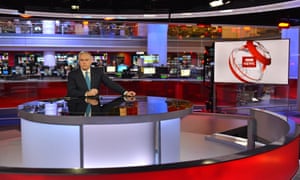
BBC News most trusted source for more than half of people in the UK
http://www.theguardian.com/media/2016/mar/10/bbc-news-most-trusted-source-for-more-than-half-of-people-in-the-uk
In this article it addresses the YouGov survey commissioned by 38 Degrees shows 53% rank the BBC as their most-trusted news source and do not trust the government with its future. this article focuses on More than half of people in the UK regard the BBC as their most trusted source of news, according to a survey commissioned by campaign group 38 Degrees.The results of the poll, published on Thursday, also suggested more than half of people did not trust the government with the future of the BBC. This article would be giving the most trusted source is BBC as to getting more than half of the people in UK it is a free new source and this could be the reason of this.
1. A total of 1,731 people took part in the online survey between 24 and 25 February.
2. More than 177,000 38 Degrees members made individual submissions to the government’s charter review public consultation.
3. The BBC also ranked top when given a selection of non-broadcast sources of news. Half of respondents ranked it first as a trusted source of balanced and unbiased reporting, ahead of family members (18%), national broadsheet newspapers (11%), social media (5%) and national tabloids (2%).
From this article i can see why BBC news is a trusted source. this would be because its a free and a public service broadcaster to all. They give detailed stories to what people would want.in information. This would be that the BBC news are trusted by the people because they do not trust the government and there reasons was that they didn't know. The article is true because out of all true news BBC does this and doesn't have a pay-wall at the start as to newspaper industries. I think that BBC is a trusted source and its the oldest news station which is globally helped us with weather and news update around the world.
Monday, 7 March 2016
Sunday, 6 March 2016
Adblocking: what are your reasons for blocking ads online?

http://www.theguardian.com/media/2016/mar/04/adblocking-what-are-your-reasons-for-blocking-ads-online
Web users turn to adblockers to speed up page load times, but the software is criticised for robbing publishers of vital revenue. Earlier this week culture secretary John Whittingdale described adblocking as a “protection racket” and a real danger to areas of the media who rely on advertising. The counter argument is that publishers and newspapers have created this problem themselves by trying to maximise profit from digital visitors with increasingly obnoxious ad formats and more intrusive ways of tracking who has seen them. This article gives the in sight that it does create moeny still for the adblock and would be still an issue.
1. 22% of the UK’s internet users have an adblocker installed.
2. Figure rises to almost half for 18- to 24-year-olds.
3. We’d like to hear from people who regularly use adblockers. What are your main reasons for blocking online advertising with this software? Have publishers gone too far with digital ads? What other methods to build online audiences and revenue do you think would be more productive? Or do you agree with John Whittingdale that “if people don’t pay in some way for content, then that content will eventually no longer exist”? This would be a questionnaire that are doing which can be answered.
Its good to be asking the views of this as to is it a problem if money is being put into this. Its still giving the affect of not getting ads randomly popping up. I believe the page speeding up and yes it is taking the money but it still a positive for the consumers because we are getting what wanted. Its protection as to not wanting adverts from coming over and over. overall i believe it is good and i believing this article is good for asking for opinions.
Rupert Murdoch's (maybe) farewell to Twitter is the end of an era

http://www.theguardian.com/media/2016/mar/04/rupert-murdoch-twitter-farewell-final-tweet
On Friday, the News Corp founder signed off the microblogging service, possibly for ever, thus ending his run of making news simply by stating his opinions The article explains that Rupert Murdoch is quitting twitter. He tweeted saying 'No more tweets for ten days or ever! Feel like the luckiest AND happiest man in world.' The “or” leaves some hope for his 745,000 fans. But if this is it, he will be missed. The 84-year-old founder of News Corporation often made headlines simply by expressing his opinion on the news of the day.
1. Now the octogenarian has found happiness in the arms of a former supermodel, Murdoch clearly isn’t feeling the need of Twitter. Love needs more than 140 characters. Farewell Rupert, the subtweeters will miss you.
2. He was also changeable – his disdain for Donald Trump transformed into something like grudging acceptance over the course of Trump’s campaign as Murdoch, with the rest of the world, gradually came around to the idea that the Las Vegas hotelier’s bid for the US presidency was more than a lengthy gag.
3. He paid attention to the news closer than most, and he always supported the home team, especially the old-style newspapermen and -women who had helped to sell his products, especially those with an eye for a catchy front page.
Twtter is where we all express our opinions and i believe we should share our views and if we dont agree we can debate. I believe him not tweeting does not make a difference as they're will be people like him and i believe that there will be people with the same ideology making no different in the social media of twitter.
Independent NDM case study: Media Magazine research
Notes and quotes
Media magazine 40:
-Games being turned into movies
-video game developers have stolen many a great tale from under
Hollywood’s nose, and every effort made to adapt one, the recent Max Payne
(Moore, 2008), for example, has been a royal stuff-up. It’s true that games
have always strived for the feel of cinema. I remember playing Chase The
Express as an eager pre-teen and thinking how cool it was to control the lone
soldier caught amid a train siege. Even at their crudest, games have sought to
replicate the thrills of a cinematic adventure like Die Hard (McTiernan, 1988),
but personally, don’t see them attempting to become movies . They’re trying to
fill in the narrative gaps that movies just don’t have time to consider.
-Particularly of Far Cry 2, which pits the player into the middle
of an African nation consumed by civil war. In cinema the protagonist would be
tasked with bringing down the oppressive regime, and within a 120-minute
timeframe they would do so and the focus must always be on action, as within
this constrained timeframe there is little room for politics or character
development. The game features a real-time day/night cycle, genuine weapon
degradation and no HUD (Heads-Up Display) to guide the player, instead
demanding a crinkly old paper map be used to get from Point A to Point B. In so
many action movies we see the character outnumbered and outgunned, forced to
improvise in impossible scenarios. We know they’ll always make it.
-This would be talking about the movie industry running out of
narrative ideas that they change it to the point of changing games into movies.
From the media magazine it gives the information that movies don't have the
uniqueness and this would be showing that its all about the money with the
industry because all new narrative is hard to find.
Media magazine 44:
-Is hollywood out of ideas
-Hollywood is a business made up of profit-driven studios; small subsidiaries of multinational conglomerates that care little for the art of film. Their purpose is to succeed in a capitalist marketplace; survival, growth and competition.Box office sales are the key to big profits.They spend big money to ensure they will deliver the biggest spectacles: cutting-edge special effects, globally recognisable stars,and locations that span the world and promise the biggest sets money can buy.
-The recent Avengers film appeared to be the pinnacle, with numerous characters already set up in their own films teaming up in one mega-movie, but now Marvel are working on their second phase, with new films for all the individual characters, led by the darker looking Iron Man 3 out this year.
Twilight is a teen literature adaptation, again showing Hollywood’s love of taking properties with an existing fan base (see also Harry Potter and The Hunger Games). Horror has most recently replayed found-footage films on an endless loop ever since the success of Cloverfield and Paranormal Activity.
-lack of imagination and desperation to jump on the bandwagon are vampire films spurned on by the
success of the Twilight saga. Abraham Lincoln: Vampire Hunter, Stake Land,Let Me In (itself a remake) and, of course,an inevitable parody, Vampires Suck,all emerged recently, cashing in on the
renewed popularity of the creatures of the night (or just Hollywood’s desperation to suck every last
drop of cash from them).
- Hollywood executives analyse the market to see what works, what sells and what they can imitate, steal or build on to capitalise on current market trends. Genres, cycles and trends can all overlap. For example, in the wake of Scream in the late 90s, a revived cycle of similar self-aware slasher films was produced. Trends that are clearly popular at the moment and currently exploited by Hollywood are the superhero cycle of films, and particularly since Christopher Nolan’s Dark Knight trilogy, the tendency for superhero films to get darker in theme and tone. Three of the Top Ten films of 2012 are superhero movies. The Avengers and The Dark Knight Rises took the top spots and the rebooted The
Amazing Spiderman also made the Top Ten.The Dark Knight Rises and its seriously dark themes and subject matter that reflect post 9/11 terrorism anxiety (see page 37) seems to have fed into the production of 2013’s Man of Steel Superman update, judging by the teaser trailer.
-Not only does Hollywood appear to be out of ideas and looking to other mediums for sources of inspiration but they are also determined to milk every last good idea for the maximum profit.
-Hollywood has begun plundering its own back catalogue in earnest, as well as seeking out popular world cinema films which, because of subtitling, will not make money at the US box office. So though the French film The Intouchables did great business around the world, Hollywood is already
preparing a remake to cash in on the American audience. The Dark Knight trilogy is itself a reboot of an already successful Batman franchise that lasted four films and, as mentioned earlier, it took Spiderman only five years to be rebooted after the original trilogy finished in 2007. The Star Trek franchise was recently rebooted to great success, and horror classic Evil Dead is being remade this year, the latest in a long line of classic horrors being remade for amodern audience by an industry short on fresh ideas.
- Foreign language favourites are continually remade by Hollywood withrespected directors like Martin Scorsese (The Departed) and David Fincher (The Girl with the Dragon Tattoo) becoming
involved. Korean revenge flick Oldboy is also being remade this year by Spike Lee,suggesting that even successful directors are looking to previously produced scripts to make a buck. It is as sure a sign as any that Hollywood has nothing left to offer the world but exploitation of its past glories and
the success of original international ideas. Hollywood even celebrates its complete lack of originality by awarding Scorsese a Best Director Oscar for his remake of Hong Kong’s Infernal Affairs.
- Television series, books, fairytales and video-games. With the video-games industry over taking Hollywood in income recently, Hollywood is keen to capitalise on this. Resident Evil: Retribution is the fifth film in a franchise based on the popular video-games. Every new entry in the series gets consistently panned by the critics, yet they continue to be extremely profitable with fans of the games. 21 Jump Street made the Top Fifty of 2012 with its adaptation of an 80s television show starring Johnny Depp, while the first of what Paramount was no doubt hoping would become an extremely lucrative franchise, Jack Reacher, under-performed, suggesting this time there may not be a sequel. Not only does Hollywood appear to be out of ideas and looking to other mediums for sources of inspiration but they are also determined to milk every last good idea for the maximum profit. The Hobbit, a children’s book, has been adapted into a trilogy of films, to ensure revenue will pour in from this one idea for some time to come.
Media Magazine 45:
-In a film culture built on the online
experience of accessing films (and other media such as books, games, music
etc.) is that sense of having exchanged a limited sense of ‘coming
attractions’, as listed in the cinema foyer, for a much wider range of
recommendations of similar kinds of films, possibly all related to our own
preferences.
-Films were like
novels and that we would choose carefully what we wanted to see,
and would ‘read’ a film in the same way we would read a novel.
-There are many ways to access films on-line, ranging from the big brands like iTunes, Love Film and Netflix, with both fixed prices and subscription rates for rental or download, through to the pirate operations that offer bit-torrent downloads. The latter are, of course, illegal, which we can’t condone but we must consider whether the thrill of watching something illegally acquired actually becomes part of the reading experience. This is also linked to the sense of superiority we tend to feel if we see something before everyone else, or our smugness when we get to see something for free that we know many people have paid to watch.
Media magazine 47:
-The anti-piracy groups, is the loss of revenue.
From their perspective every view of a stream equals a lost cinema
ticket, Blu-ray sale or subscription to a legitimate source such as
Netflix or Amazon. We can see how this might pan out with a specific
example If we take one of 2012’s most illegally downloaded films,
Mission: Impossible Ghost Protocol (reportedly 8.5 million torrent
file downloads) and search for it on Primewire, it produces a list of
26 file hosting sites and presents a total view count of about
305,000. Small potatoes compared with the downloads. But if we assume
that each of those 305,000 views is a lost cinema ticket or Blu-ray
sale, we can estimate the loss of revenue to the industry to be
somewhere between £2 million and £4.5 million, which is somewhat less insignificant.
-With UK cinema admissions steadily rising, it seems difficult to argue that the UK film exhibition industry is suffering from the impact of piracy.
-The prime motivator for audiences to access unauthorised streams of content is immediacy. For example, in the UK the only way to watch The Walking Dead is on Fox HD, which requires a subscription to Sky. The problem for UK audiences is that this runs about one whole season behind the US schedule. In this way the programme is a victim of its own success; audiences just can’t get it fast enough.
-Marvel universe first time in cinematic
history,fans know what films they will be getting from a studio six
or seven years into the future, and are being prepared for it long in advance
where studies dont have a time table. having this time table makes fans of the
marvel universe spend their money more on the studio as to knowing the movies
coming out.
Subscribe to:
Posts (Atom)